

At-a-glance principles
- Align with goals of care and prognosis. Note that tapering takes MONTHS, therefore stable opioids that improve comfort are usually continued in those with limited prognosis
- Avoid abrupt stops. Reserve rapid dose reductions for imminent safety threats only.
- Go slow, collaborate, and individualize. Pace, pause, or reverse as needed.
Who is a candidate?
- Pain improves, or painful disease state improved (e.g. cancer remission)
- Insufficient benefit (little improvement in analgesia or function despite dose escalation).
- Intolerable adverse effects (sedation, falls, constipation, cognitive effects).
- Serious safety events (overdose, delirium) or high‑risk co‑medications (e.g., benzodiazepines).
- High‑risk comorbidities (OSA, pulmonary disease, renal/hepatic impairment, frailty/advanced age).
- Patient preference to reduce or stop.
- Misuse/OUD concerns (consider assessment and tailored plan)
When to start?
- When benefits no longer outweigh risks, or safety signals emerge.
- Around transitions (e.g., post‑curative treatment, functional recovery).
- When the patient is ready and supports are in place.
- Do not mandate tapering by rigid system thresholds.
How to talk about it (framing & consent)
- Validate the patient’s pain and experience.
- Explain why tapering may improve safety and sometimes improve pain/function via reduced hyperalgesia and side effects.
- Set shared goals: dose reduction vs. discontinuation vs. rotation.
- Reassure continuity: “We won’t abandon you,” and outline non‑opioid and non‑pharmacologic supports.
- Agree on flexibility: plan can pause/slow; success ≠ zero—any net reduction can be a win.
Example Case:
Patient: Maria S., 58, metastatic breast cancer with bone mets, now in partial remission after chemo/radiation.
Current pain control: Baseline 2–3/10; flares to 6/10 with activity.
Regimen: Oxycodone ER 20 mg BID; oxycodone IR 5 mg q4–6h PRN (uses ~3/day); gabapentin 300 mg TID; bowel regimen.
Concerns: Daytime sedation, constipation, one recent near‑fall; wants to resume driving and increase activity. No red flags for OUD; occasional lorazepam 0.5 mg PRN insomnia. Strong preference to “go slow.”
Goal: Reduce side effects while keeping pain ≤4/10 and improving function (walk dog 20 min/day, drive short trips).
Pre‑visit prep (clinician):
- Review PDMP, recent fills, and interactions (flag PRN lorazepam → limit/avoid while tapering).
- Assess readiness, function, mood/sleep, constipation, and risk/benefit balance.
- Line up supports: acetaminophen scheduled, non‑pharm tools (heat, gentle PT/OT, sleep hygiene), naloxone, and PRN clonidine for withdrawal symptoms (avoid if hypotensive).
- Plan close follow‑up (1–2 weeks after each change).
Conversation script (ask–tell–ask; shared decisions)
1) Opening & agenda
Clinician: “Maria, today I’d like to check in on how your pain medicines are working and talk through options to reduce side effects while keeping your pain controlled. How does that sound?”
Patient: “Good, I’m tired of feeling groggy.”
Clinician (reflect): “You want less grogginess and to drive again, without losing pain control.”
2) Elicit goals & concerns
Clinician: “What would success look like over the next month?”
Patient: “Walking the dog daily and short drives.”
Clinician: “Great—let’s aim for that and keep pain under 4/10.”
3) Why taper (tell)
Clinician: “Given your stable cancer pain and side effects, a slow dose reduction can improve alertness, constipation, and sometimes even pain sensitivity. We’ll go gradually and can pause if your pain worsens.”
4) Check understanding & consent (ask)
Clinician: “What worries you most about reducing the dose?”
Patient: “Withdrawal and pain flares.”
Clinician: “We’ll prevent flares with non‑opioids and other techniques, keep IR oxycodone for breakthrough, and I’ll prescribe a short course of clonidine for symptoms like sweats or restlessness. We’ll follow up closely. Ready to try a small step together?”
5) Offer options & let patient choose
Clinician: “Option A is a 10% reduction this month; Option B is even smaller, about 5%, to test the waters. Which feels right?”
Patient: “Let’s try 10%, but I want the ability to slow down.”
6) Agree on a plan (specifics + safety)
Clinician: “Perfect. Here’s the plan we’ll start with and adjust as needed.”
How to taper (rates & methods)
- Default pace: reduce 5–20% of the total daily dose every 4 weeks.
- Faster but selective option: 10% of the original dose weekly until ~30% of the original remains, then 10% of the remaining dose weekly.
- For long‑term therapy (>1 year), ≈10% per month is often better tolerated.
- Technique tips:
- Use the smallest available strengths; drop one dose at a time or extend intervals when near the bottom.
- Consider opioid rotation if side effects predominate.
- Document milestones, stopping rules, and follow‑up cadence.
Managing withdrawal & safety
- Optimize non-opioid therapies: acetaminophen/NSAIDs (when appropriate), neuropathic agents, topical therapies, PT/OT, CBT‑i, relaxation, etc.
- Set expectations: anxiety, restlessness, myalgias, GI upset, and insomnia typically peak 5–10 days after a reduction; sleep/mood issues may last longer.
- Treat symptoms: short‑course α2‑agonists (e.g., clonidine/lofexidine), antiemetics, antidiarrheals, non‑sedating sleep strategies.
- Overdose prevention: warn about loss of tolerance; co‑prescribe naloxone when appropriate; caution with benzodiazepines and alcohol.
- If taper stalls or OUD is present: consider buprenorphine (including low‑dose/micro‑induction approaches) and addiction‑medicine support.
Special contexts
- Active cancer pain/treatment: opioids remain first‑line for moderate–severe cancer pain; tapering becomes relevant in survivorship or when disease‑related pain improves.
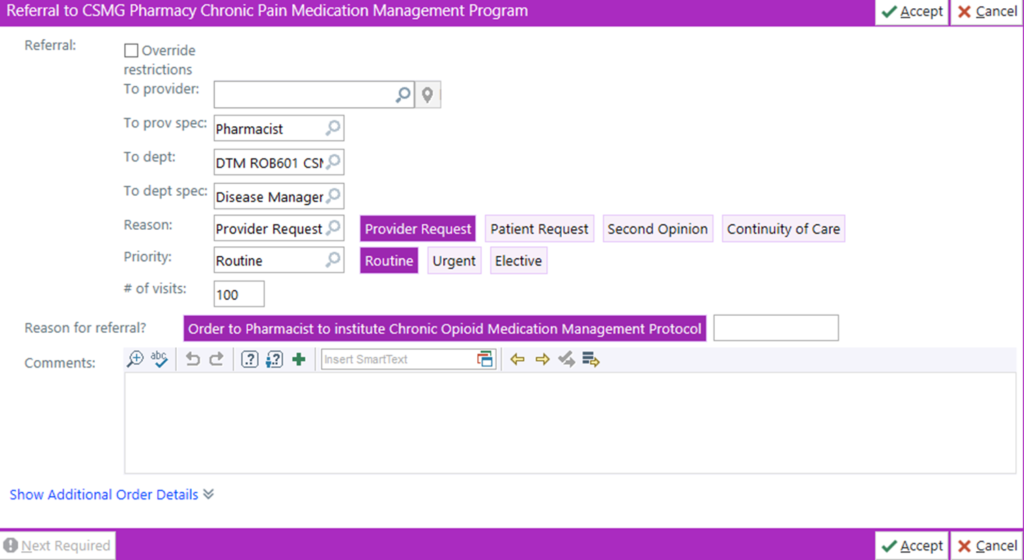
- Consider referral to Opioid and/or Benzodiazepine weaning program – led by Advanced Practice Pharmacists (APh) who regularly meet and support patient in the outpatient setting
Bottom line: Taper only when it fits the patient’s goals and safety profile. Go slow, collaborate, treat symptoms proactively, and prioritize safety over speed—avoid forced or rapid tapers except for imminent danger.
References:
HHS (2019): Guide for Clinicians on the Appropriate Dosage Reduction or Discontinuation of Long‑Term Opioid Analgesics
https://www.hhs.gov/system/files/Dosage_Reduction_Discontinuation.pdf
VA Opioid Taper Decision Tool
https://www.pbm.va.gov/PBM/AcademicDetailingService/Documents/Pain_Opioid_Taper_Tool_IB_10_939_P96820.pdf
CDC (2022): Clinical Practice Guideline for Prescribing Opioids for Pain — United States, 2022 (MMWR)
https://www.cdc.gov/mmwr/volumes/71/rr/rr7103a1.htm